- Rebecca Coombes, head of journalism,
- Hristio Boytchev, freelance investigations reporter,
- Gareth Iacobucci, assistant news editor
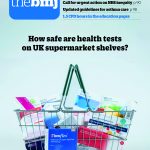
In the health aisle of your local supermarket, a range of self-testing kits—including for male fertility, vitamin D deficiency, and menopause—now sit between sleep aids and pregnancy tests. This plethora of self-tests, including for serious conditions such as cancer, offer to provide simple answers to complex problems—but experts warn the reality is far more nuanced, and that the tests are potentially misleading.
“Why is it that a 15 year old can walk in and buy one of these tests?” asks Jackson Kirkman-Brown, director of the Centre for Human Reproductive Science at the University of Birmingham. “There is no support or understanding of what they are looking at.”
The male fertility tests typically measure sperm count or activity but offer no insight into other clinically relevant factors—laboratory tests also look at sperm shape, for example, and clinics will take details from a partner into account. “More than half of couples with fertility problems are thought to have a male factor, but many men would not be abnormal by evidence of one of these tests,” Kirkman-Brown adds. A normal result may falsely reassure, and an abnormal one might cause anxiety, unnecessary follow-up tests, and treatment.
Availability of self-testing kits has expanded in recent years, especially since the universal use of lateral flow tests during the covid-19 pandemic, with the UK market for self-tests expected to reach a projected revenue of £660m by 2030.1 But studies published in The BMJ this week have raised serious concerns about their accuracy, clinical value, and regulation.23
All the tests evaluated met European requirements for in vitro diagnostic medical devices and are cleared for sale in the UK. Researchers say this shows that urgent regulatory reform is needed to protect the public from potential harm. The Medicines and Healthcare Products Regulatory Agency (MHRA) says that it will investigate reported allegations of self-tests that do not comply with the regulatory standards.
New evidence of risks
Researchers at the University of Birmingham assessed 30 tests for 19 different health conditions, bought locally in 2023, and found that 60% had at least one high risk usability problem.3 Despite claims of accuracy, supporting evidence was often unavailable or flawed—based largely on poorly designed laboratory studies. Study reports for only 12 of the 30 tests could be obtained, and many lacked robust data.
The tests, which have CE marks—a certification mark to signify that products have met essential European standards—are sold in major retailers such as Tesco and Superdrug and retail at£1.89 to £39.99. They require samples from a range of body fluids, including nasal and oropharyngeal secretions, capillary blood, urine, seminal fluid, vaginal secretions, and stool.
Many of the kits assessed had poorly written instructions that failed to clearly explain how to collect samples and interpret results, researchers found.2 Some had instructions clearly not suitable for home use, such as suggesting a centrifuge to clear a cloudy urine sample. Key information about test limitations was omitted, as were details about follow-up actions and when to seek medical advice. Packaging often featured bold diagnostic claims without adequate context or supporting detail.
Of the 30 tests, only eight provided information on the box about who should or should not use the test to guide purchasing decisions, only seven indicated the action that would follow the result, and only 10 provided quantitative information about the accuracy of the test.
Jon Deeks, professor of biostatistics at the University of Birmingham and corresponding author of the studies, says: “Our research raises concerns about the suitability, accuracy, and usability of many of the self-testing products available that require users to sample, test, and interpret results themselves. In some cases, it is unclear how accuracy claims are supported.”
“Can be frozen to −20°C”
Most self-test manufacturers either refused to provide reports of the studies that support their claims, stating that they were commercially confidential, or didn’t respond to requests, says Deeks. “Legally, they do not need to share this information. However, for all matters of our health, it really is important that the evidence upon which health decisions are made is available and can be scrutinised.”
When studies were available, they were of low quality and lacked details, such as the populations in which the tests were evaluated. When the populations were described, some were unrepresentative of the intended user. A usability study for one of the menopause tests, for example, included a majority of women whose last menstrual period was within two months and therefore did not fit the criteria for menopause.
Researchers found many examples of poor instructions for consumers, some completely unsuitable for home use. In one case, instructions were printed directly onto the faecal sample collection sling and became unreadable when in use. Several urine tests gave unrealistic instructions to users for freezing samples, sometimes at temperatures as low as −20°C. Others warned that, as specimens might be infectious and a potential biological hazard, the use of disposable gloves and face masks (not supplied) was advised to prevent exposure.
Nearly all tests recommended follow-up with a healthcare professional—and not only when results were positive. Fourteen of the 30 tests recommended seeking support if results were negative. Bernie Croal, president of the Royal College of Pathologists, emphasised the knock-on effects for the NHS. “There are significant risks to patients when poor quality tests are carried out inappropriately, with both false reassurance and unnecessary consequences for the NHS to repeat tests or take additional action,” he told The BMJ.
Kristien Boelaert, professor of endocrinology at the University of Birmingham and a consultant endocrinologist, goes further. Speaking about self-tests for thyroid disease, she says, “I actually think it’s dangerous. I would like there to be central UK-wide regulation . . . that prevents these things from coming on the market. I think the biggest potential harm is a false reassurance that, if it’s not positive, everything is fine.”
Regulatory issues
Clare Davenport, clinical associate professor at the University of Birmingham and coauthor of the studies emphasises the need for greater regulation: “The same consideration given to pharmaceuticals should be given to self-testing where some, such as pregnancy tests, could be sold over the counter and others that carry greater risk of misuse are sold only with the support of a pharmacist. These latest studies have also shown that information and data that support claims of accuracy, specificity, or sensitivity need to be available to the public.”
New medicines must undergo a stringent regulatory process, including clinical trials and registration with the MHRA. By contrast, medical self-tests are subject to much less stringent tests by notified bodies, the European companies that award CE marks. This has allowed certain self-tests to be sold in the UK, despite them raising concerns. Many of the branded tests sold in UK supermarkets and pharmacies originate from a small number of manufacturers and notified body approvals. So, although it looks like there are many different brands of these tests, most of them are actually clones that originate from small numbers of companies.
The MHRA tells The BMJ that tests with CE marks will be recognised in Great Britain up to 2030. This month, post-market surveillance regulations came into force that require manufacturers to monitor the use of self-tests, including reporting significant incidents to the MHRA, it says.
All within the rules
Newfoundland Diagnostics distributes many self-tests in the UK, including the four tests with the largest number of problems (box 1), and was one of the few companies to provide supporting documents when requested. A spokesperson says it is “committed to high standards of performance, transparency, and user safety, with kits meeting all European requirements for in vitro diagnostic medical devices and MHRA guidelines.”
Four self-tests with the most identified problems
The BMJ has focused on four types of test that researchers said seem to raise the most problems. They were all distributed by one of two companies, Newfoundland and Suresign.
Follicle stimulating hormone (FSH) menopause tests (Menopause (FSH) Rapid Test; FSH Rapid Menopause Test Midstream)
Seven high risk concerns were raised for the FSH menopause tests. One usability study mostly included women younger than 40 with recent menstruation. Instructions mention laboratory steps such as freezing or refrigerating urine samples and using a centrifuge. Lynne Robinson, a consultant gynaecologist at Birmingham Women’s Hospital, says: “Women under 40 years old can be menopausal, but including women with their last menstrual period in less than two months does not fit the criteria for menopausal. These women may be perimenopausal, but as FSH levels fluctuate, [the tests] need to be done on day 2-5 of the cycle or anytime if they are not having periods. Otherwise, it is very difficult to interpret the results.” Suresign, a distributor, says the tests could be purchased by professionals or used by pharmacists for in-store testing, both of whom may have access to centrifuges or filters.
Microalbuminuria Rapid Test Kit (Colloidal Gold) for the diagnosis of chronic kidney injury
This test had the most usability issues of all the tests examined, including sampling challenges and unclear result interpretation. The instructions mention laboratory equipment and leave it unclear whether the test is for chronic kidney disease or acute injury. Faint colour charts make results hard to read. Paul Stevens, co-chair of the Kidney Disease: Improving Global Outcomes 2024 guidelines for the evaluation and management of chronic kidney disease, says that doctors are trying to move away from using the confusing term “microalbuminuria,” because it sounds like a different kind of protein, when it actually just means a small amount of albumin (a normal protein) is showing up in urine. Detecting this can be an early sign of kidney disease, but the amount needs to be measured accurately using the albumin-to-creatinine ratio. He says that point-of-care tests should provide this ratio, not just a simple positive or negative result, and they need to be checked against high quality laboratory tests to make sure they’re reliable.
Vitamin D tests (Vitamin D Rapid Test Cassette; Vitamin D Test)
The colour chart for these tests omitted a shade, and subtle differences made it hard to read. Pipette blood collection often failed. Suresign, a test distributor, says the human eye can distinguish subtle shades and that the test and chart were updated in 2023 and 2024. Bernie Croal, president of the Royal College of Pathologists, says that Vitamin D tests are “very much overused” in the UK, “with hundreds of millions of pounds spent every year in the NHS on both testing and prescriptions for vitamin D supplements. Direct to consumer testing, chosen and carried out by patients and pushed by the commercial sector, remains largely unclear when such issues around quality, regulation, and appropriateness are considered.”
TSH Rapid Test Cassette to detect underactive thyroid
In the instruction for use leaflet, the text and figure muddle steps 6 and 7 in the opposite order, so consumers are told to add the buffer first in the figure, and to add blood first in the text. The text instructions state to use two drops of blood, but the pipette could hold more than this. Kristien Boelaert, professor of endocrinology and consultant endocrinologist, tells The BMJ: “I have a problem with screening for thyroid disease because there is no need. Symptoms of abnormal thyroid function are notoriously vague . . . tiredness, weight changes, a bit of anxiety. And the NICE guidelines recommend that going on one symptom is generally not enough. GPs and clinical practitioners will have clear trigger points for doing a test, so I don’t see how it would help patients to do a test that is going to say, ‘yes, you are above a certain thyroid stimulating hormone’ or ‘no you’re not,’ because the ‘no you’re not’ doesn’t mean that everything is okay.”
-
Hangzhou AllTest Biotech, manufacturer of the menopause, Vitamin D, and thyroid tests, and Hangzhou Singclean Medical Products, manufacturer of the microalbuminuria test, both based in China, did not respond to The BMJ’s invitation to comment.
They added: “As part of our continuous development, we regularly work with new and existing suppliers to improve product quality. Previous tests, of which these reviews seem to refer, have gone through extensive quality and usability overhauls to ensure they are as easy to use as possible, whilst also being sustainable and affordable.”
Suresign, which distributes tests in the UK, including two of those that researchers said seem to raise the most concerns (see box), says that the tests should be used for “screening” and “not for taking medical decisions.” A spokesperson tells The BMJ, “They are not intended to replace tests carried out by professionals. Currently it is difficult to get an appointment with a GP, and therefore these tests provide information to enable users to actively seek a medical opinion if necessary.” The menopause and vitamin D tests were updated in 2023 and 2024.
Tesco, the UK supermarket that sells a wide range of health kits, tells The BMJ that it complies with all the relevant regulations “and [the tests] are approved within Tesco’s normal supplier frameworks and processes before they are listed for sale.” Boots, another seller, says it conducts regulatory checks on the self-testing products it sells. “As the majority of our stores have a pharmacy, we are well placed to support customers with any queries or concerns they may have about the results of self-tests they complete,” it adds. Wells Pharmacy, one of the largest pharmacy chains in the UK, did not reply to The BMJ’s invitation to comment, and neither did Superdrug.
TÜV SÜD, a notified body based in Munich, Germany, which, according to the packaging, approved the four tests that researchers said seem to raise the largest number of issues, referred to the manufacturers when confronted by The BMJ with the problems found regarding the tests. “TÜV SÜD is subject to a legal duty of confidentiality as a notified body, and, as a service provider, we are also in a private law contractual relationship with the manufacturer and are subject to corresponding confidentiality obligations,” it says. It will include the findings of The BMJ studies “in the monitoring programme for the manufacturer,” it adds.
Deeks criticised the body over its decisions to approve some of the tests, alleging a lack of detail when explaining those approval decisions. “TÜV SÜD has acted as the regulatory gatekeeper that has allowed the tests The BMJ investigation has focused on to go on the market,” he said. “The decisions that these tests are fit for purpose and safe to the public is their responsibility.”
Don’t use GPs as a default
Concerns in the wider clinical community continue. Kamila Hawthorne, chair of the Royal College of General Practitioners, which has campaigned for greater transparency around these kits, says that there are ethical concerns about making money out of people without the necessary health literacy. “With the risk of false positives and negatives, and no offer of an interpretation of the results or aftercare, self-testing kits can mean patients experience a significant amount of stress and anxiety—prompting them to seek guidance from their GP to interpret any results. This not only negatively impacts patients, but it can also intensify the enormous pressures that GPs and their teams are currently under,” Hawthorne says. “Commercial self-testing kits should not default to NHS general practice as the provider for next steps and aftercare, unless the test was initiated in primary care or as part of a commissioned NHS service.”
Since collecting their initial sample of tests in 2023, Deeks and his team have continued to track the market—and it’s booming. A repeat search of the same geographical area in December 2024 identified 63 tests, twice as many as the previous year, many of them clones of existing self-tests, rebranded and sold under different names by a range of distributors.
There is an urgency for regulatory action and to harness the potential of these tests, says Deeks. “Self-tests have a clear potential to improve public health. However, for them to be beneficial and not harmful, they must be proven to be accurate, easy to use, and supported by clear instructions. We hope the MHRA will update the regulatory process to ensure self-tests are effective and safe for everyone.”